
Bulletin of the Atomic Scientists, February 16, 2026
Posted: 17th February 2026

February 16, 2026
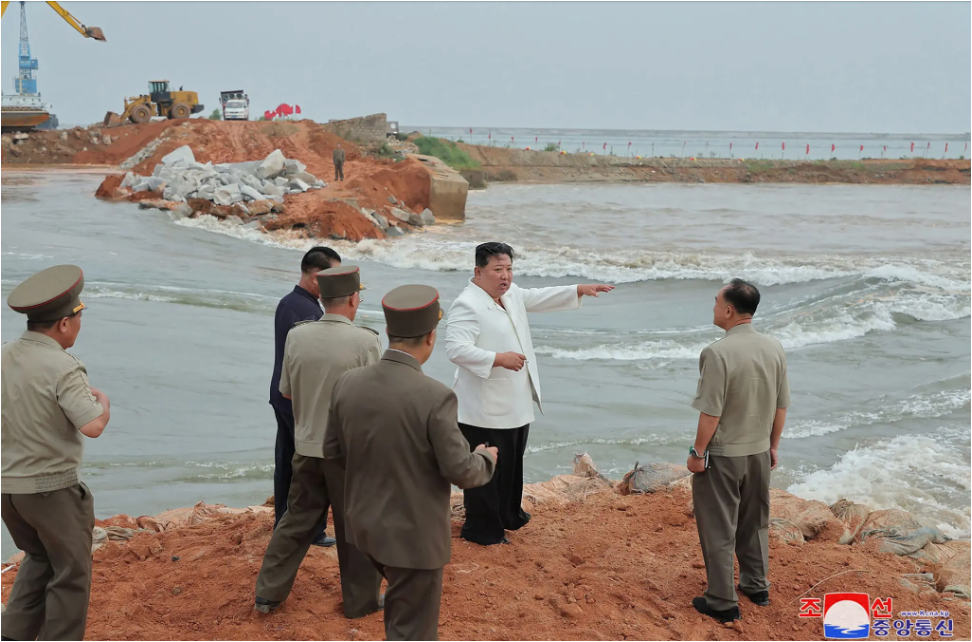
Kim Jong-un surveys an embankment that failed and allowed seawater to flood rice paddies on North Korea’s east coast during Typhoon Khanun in August 2023. (KCNA)
Environmental self-reliance in North Korea: a potential path to engagement
The United States and its allies could help Kim Jong-Un solve his country’s severe environmental problems in exchange for military concessions while emphasizing North Korean self-reliance. It’s a long shot, but a potential win-win, writes Elijah Geltman. Read more.
In Munich, Europe tries to strike a balance: “We need a more European NATO.“
Former President of the European Commission José Manuel Barroso tells the Bulletin that Germany and France must work out their differences over nuclear weapons to strengthen Europe’s security. Bulletin nuclear editor François Diaz-Maurin reports from the Munich Security Conference. Read more.
Seabed zero: Baltic sabotage and the global risks to undersea infrastructure
Western economies have become dependent on data and energy flow along the seafloor. Russia and China are weaponizing that dependency, writes Bruce D. Jones. Read more.
Trump’s EPA kills the endangerment finding—the legal basis for nearly every major US climate regulation
“President Donald Trump’s approach to climate change rests on one key premise: Greenhouse gases are not that bad. This is a simple argument—albeit one that flies in the face of the scientific consensus on climate change—but it could have profound consequences,” writes Jake Bittle. Read more.
VIRTUAL EVENT
Decision Time: AI and Our Nuclear Arsenal
Command and control of nuclear weapons is a delicate and complicated system, designed to prevent error while ensuring reliability under high-pressure conditions. In environments where vast amounts of data shape high-stakes outcomes, artificial intelligence has become a natural consideration. Yet the integration of a rapidly evolving technology raises fundamental questions about responsibility, data quality, and system reliability.
Join us and the Outrider Foundation for an in-depth conversation on February19, 1:45 PM ET/12:45 PM CT. Sign up here.
Recent articles
- The ick factor won’t stop alt meat, if Bruce Friedrich has anything to say about it
- What the National Defense Strategy’s ‘limited support’ means to South Korea
- New START ends. But a one-year extension could bring many benefits
- Nuclear arms control and disarmament after New START
- Three arms control proposals for a post-New START world
QUOTE OF THE DAY
“Just because we say we’re going to stop caring about these issues doesn’t make the issues go away — it just makes us less prepared.”
— Nahid Bhadelia, director of Boston University’s Center on Emerging Infectious Diseases in Massachusetts, “Exclusive: Key US infectious-diseases centre to drop pandemic preparation,” Nature
Your gift fuels our mission to educate and empower. Together we will work to ensure science serves humanity.
Give today