
Taxpayers paid to send MoD official to work for elite bank Rothschild & Co
Posted: 13th January 2026
FEATURED STORY
Taxpayers paid to send MoD official to work for elite bank Rothschild & Co
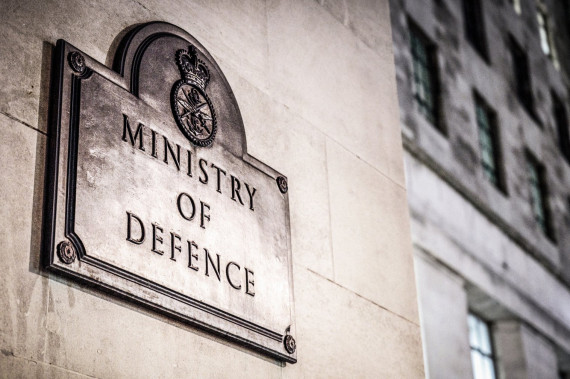
Taxpayers paid for a Ministry of Defence official to spend almost a year working for an elite investment bank that’s seeking to increase the role of private finance in military budgets, openDemocracy can reveal.
The staffer was seconded to Rothschild & Co in February last year and recalled to the MoD on 5 January 2026 – the same day we contacted the government to ask about it.
They were placed in the bank’s geopolitical advisory department to work under Mark Sedwill, who was the UK’s cabinet secretary and national security adviser until 2020, when he left office and was appointed to the House of Lords.
Today, as well as being a crossbench peer and a member of Parliament’s Joint Committee on National Security Strategy, Sedwill advises Rothschild’s clients on geopolitical risk – and has also been involved in lobbying the government to increase private finance’s investment in national defence spending.
The Ministry of Defence declined to comment on whether Sedwill was directly involved in establishing its staffer’s secondment, which openDemocracy understands relates to government plans to increase partnerships with private finance to raise defence spending.
This arrangement could benefit Rothschild’s clients, many of whom are venture capital and private equity investors.
In April last year, defence secretary John Healey held a “first-of-its-kind meeting” with venture capital firms.
Announcing the meeting, Healey said: “In this new era of rising threats, national security isn’t just a military imperative. It’s the foundation for economic growth, securing Britain’s future and our Government’s Plan for Change. As a government, we are determined to tackle any blockers which are preventing private finance from flowing into UK defence.”
Healey also described defence spending as “an ethical investment” and welcomed “increasing numbers of private investors recognising that”.
Months later, the government published a strategic defence review that set out plans to build relationships “with the investors behind the innovators”.
“External expertise should be systematically accessed through a new Defence Investors’ Advisory Group, whose membership includes venture capital and private equity investors, while private finance should be crowded in under new funding models,” the review states.
The government has declined to provide a full list of the companies involved in the advisory group, which it established in September to help set the direction of an upcoming major spending strategy. The group is co-chaired by Kerry Baldwin of IQ Capital and the British Venture Capital and Private Equity Association, and Labour peer Baroness White, the head of global affairs for Canadian investment fund CDPQ.
The UK’s industrial strategy also sets out an ambition to close the gap for venture capital investment with the US by half and establish the UK as Europe’s leading defence exporter.
While there has long been direct collaboration between government and arms companies, with institutional finance holding a significant stake, the move to now bring in venture capitalists and private equity investors represents a shift in the degree and nature of financialisation in this area.
A recent essay by Elke Schwarz for the Transition Security Project, run by Common Wealth think tank, noted that “the UK government has tied its growth model and security strategy to the development of a US-dominated defence tech sector”.
Schwarz, professor of political theory at Queen Mary University of London, continued: “In the VC industry, war is an investment opportunity that can, and should, be scaled up.
“VC strategy thrives on rapidly speeding and scaling up growth for extraordinary returns, and in this, it inherently jars with the interest of responsible government, which should prioritise deliberation and democratic oversight, especially in matters of defence and security, rather than fast action at scale.”
The Revolving Door
Government sources told openDemocracy that the MoD official’s secondment to Rothschild’s geopolitical advisory department was signed off to allow a trade of expertise and information, and to strengthen their understanding of corporate finance and the defence sector.
An MoD spokesperson said: “External secondments allow individuals to further develop their expertise, bringing industry knowledge back into the department.”

The MoD also confirmed that there are “less than five” other officials currently seconded to private sector organisations.
Rothschild says its geopolitical advisory department provides clients with “insights and perspectives to navigate complex risks of an increasingly multi-polar world, a shifting political and regulatory landscape, a race for natural resources and the energy transition”.
Despite his position as a peer, the department’s chair, Lord Sedwill, is no longer barred from lobbying the government on behalf of his new employers as he left the civil service more than two years ago.
In May last year, Sedwill took part in a meeting with business secretary Jonathan Reynolds, which was hosted by Rothschild and ADS, the arms industry lobbying group. Gareth Davies, the permanent secretary for the Department of Business and Trade, was also involved in the meeting.
And in September, Sedwill wrote on Rothschild’s website: “Defence is now a sustained investment opportunity… Yet traditional state-led procurement will not be sufficient. New industrial models will be needed to crowd in private finance, blending public financing with institutional and private capital to scale innovation and resilience at pace.”
Like many senior officials with experience in national security, since leaving government, Sedwill has taken up a number of lucrative roles with private sector organisations in the defence and finance sectors. He is among the many figures with financial ties to defence companies who have called for the UK to increase its defence spending in response to rising geopolitical tensions, particularly the threat of Russia.
Alongside his parliamentary work and position at Rothschild & Co, Sedwill currently holds several roles in the financial sector, including as a member of McKinsey & Company’s Geopolitics Advisory Council and Temasek’s EMEA Advisory Panel. He worked at BAE Systems, the major arms manufacturer, until late 2024.
Anita Bhadani, media manager at campaign group Global Justice Now said: “The revolving door between those who run our country and private finance threatens our democracy. We would expect our government to place the interests of people above the profit margins of corporations, but with officials and members of the House of Lords taking up positions with private capital there is a real risk of conflict of interest.
“The costs of increased militarisation to our planet – environmentally, socially and otherwise – far outweigh any supposed “investment opportunity” this presents. We need investment instead in socially useful sectors that make all of our lives better, and to stand against the corporate capture of our politics.”
Sedwill is at the centre of efforts to create a European “rearmament bank” supported by private finance, alongside General Sir Nick Carter. Since stepping down as head of the armed forces in 2022, Carter has taken up advisory roles with German defence startup Helsing, Schroders bank, the Tony Blair Institute for Global Change and, as reported by Declassified UK, an advisory firm that provides “strategic consulting services to Israeli companies operating in the defence sector”.
Rothschild & Co also has ties to Hakluyt & Company, a corporate intelligence and strategy consulting firm with close ties to the UK government, which was investigated by the UK’s lobbying watchdog after an openDemocracy probe last year. The watchdog ruled that despite arranging and attending meetings with senior government ministers and officials, its communications did not constitute lobbying as set out in legislation.
The bank is an investor in the AI-backing fund of Hakluyt Capital, which was founded by Varun Chandra, now No 10’s adviser on business and investment, in his previous role as managing partner of Hakluyt.
Chandra left the Hakluyt in July 2024 to join Keir Starmer’s government but retains a stake in both the company and the AI fund. Sedwill is an adviser to Westbury Partners, a strategic advisory consultancy set up by another former Hakluyt & Company boss, Keith Craig.
Asked whether Chandra was involved in establishing the secondment, the MoD declined to comment.
openDemocracy reached out to Rothschild & Co and Lord Sedwill directly for comment, but received no response.