
Israel is acting with impunity. Is it overconfident in Trump’s support?
Posted: 19th December 2025
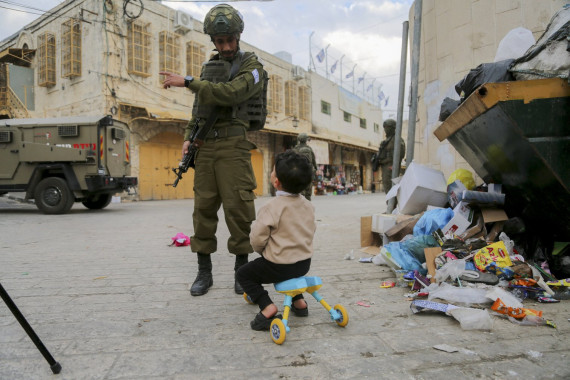
Two months into Israel and Hamas’s ‘ceasefire’, the name is already proving a misnomer. Violence continues in Gaza, where more than 360 Palestinians, including as many as 70 children, and three Israeli soldiers have been killed since 10 October.
Most of the Palestinians killed were families who were ‘collateral damage’ of Israeli aircraft and drone strikes on buildings, ruins or tents in pursuit of individual Hamas paramilitaries. Despite this, prime minister Binyamin Netanyahu has suggested Israel is ready to move to the next phase of the 20-point Gaza peace plan put forward by Donald Trump.
Reports from Washington, though, indicate that the plan itself is undergoing changes.
Tony Blair was this week quietly dropped from Trump’s “board of peace”, a technocratic administration of the self-proclaimed global great and good to oversee Gaza’s governance, according to the Financial Times.
Will you help defend democracy?
- Keep openDemocracy free to read for everyone
- Provide our team with the support they need to work safely in a dangerous world
- Deliver the reporting that matters to you – and that reaches as many people as possible
The former UK prime minister was widely expected to play a major role in the programme, possibly even leading it, but some Arab and Muslim states are said to have argued that his support for and involvement in the 2003 US assault on Iraq made him an unfit candidate.
While this is no doubt a blow for Blair, for Netanyahu, it is just a minor setback. Israel is already setting the agenda on the ground, and the prime minister is confident in Trump remaining faithful due to the voting power of the many millions of Christian Zionists in the US.
His confidence can be seen in several instances of Israel acting with impunity.
First, Netanyahu has essentially annexed the majority of Gaza in a sleight of hand.
Close to two million Palestinians have been forced into the small strip of mostly ruined urban areas along the coast, known as the Red Zone, while Israeli troops occupy the Green Zone, which makes up 58% of Gaza. Yellow concrete posts mark the divide between the two, which the Israeli Defence Forces (IDF) already consider to be Israel’s new border with Gaza.
Then there is Israel’s reported spying on the international security forces present at the Civil-Military Coordination Centre, the ceasefire-monitoring centre established by the US at Kiryat Gat in southern Israel, just 20 kilometres from Gaza, since 10 October.
The centre’s several hundred uniformed and civilian foreign staff are tasked with aid and logistic coordination, after the abandonment of the previous and much-criticised US/Israeli private aid distribution system. But press reports suggest tensions, with some foreign teams reportedly avoiding revealing sensitive information due to Israeli surveillance, which the base’s US commander, Patrick Frank, has called on Israeli officials to put a stop to.
Meanwhile, beyond Gaza, the IDF and the Israeli police are seen to have free rein in their treatment of the three million Palestinians in the occupied West Bank and East Jerusalem. One recent example was the shooting dead of two Palestinians who had surrendered.

Since Israel’s war in Gaza started two years ago, more than a thousand Palestinians in the West Bank have been killed, while in the past 12 months, around 32,000 people have been forced from their homes in refugee camps in the north of the West Bank.
At least 34 families, totalling 175 people, currently face eviction from their houses in Batn al-Hawa, East Jerusalem, by an Israeli settler group.
“Israeli military operations have forced entire communities in areas of the northern West Bank into lockdown in their homes, keeping children out of school, jeopardising family incomes and increasing risk of physical violence and child detention from the Israeli military,” said a statement last month by Save the Children, a charity that first offered support for Palestinians in 1953 and has been a permanent presence in the region for the past 50 years.
The organisation concluded that “the futures of an entire generation are being jeopardised”, pointing to disastrous prospects for Palestinian children due to restrictions on aid, settler violence, house demolitions, land confiscation and the destruction of infrastructure.
And given Netanyahu’s determination to stay in power at least until next year’s general election, it is difficult to see an early end to the grim Palestinian predicament.
As I have previously argued in these columns, the Gaza conflict will have a longer-term, multi-generational impact on Palestinians and will most certainly not give Israeli Jews the security they desire – indeed, quite the opposite, as more traumatised and grieving Palestinians come round to Hamas’s cause.
In the more immediate future, though, one recent trend is already surprising independent analysts: the marked decrease in the US public’s support for Israel. “A majority of Americans now disapprove of the IDF’s actions in Gaza,” and, more telling still, “for the first time more support the Palestinians than Israel”, according to a report in Le Monde Diplomatique this month.
So, while for now, Netanyahu is right to be confident in Trump’s unflinching support, the US president’s attitude may change abruptly if he starts to think his domestic reputation is being threatened.